SHORT NOTES
Same grenade. Both sides.
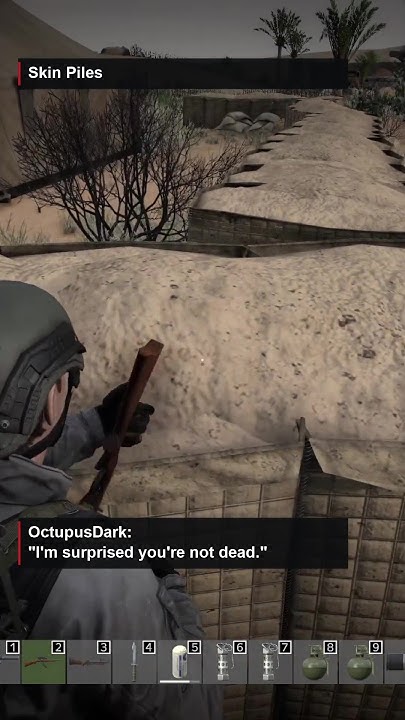
One M67 grenade, two player perspectives, and a trail of 84 recorded positions showing how it got there.
Skin Piles throws; OctupusDark is on the receiving end. Synchronized gameplay lets you follow the same event from both sides, while the diagram separates the overhead route from the vertical flight arc. OctupusDark was already injured before the explosion.
How the telemetry works here
The flight diagram uses positions recorded during the throw. Plotted from above, they show the route across the ground; in the side view, they show the rise and fall. The clip uses tracked data alongside the original footage, rather than drawing a hypothetical grenade trajectory.
The two player views are synchronized to the same event. That makes it easier to connect the throw, the arrival and the reaction without treating separate camera angles as separate incidents. The description credits the tools to OctupusDark / RESQ Games.
What else can we measure?
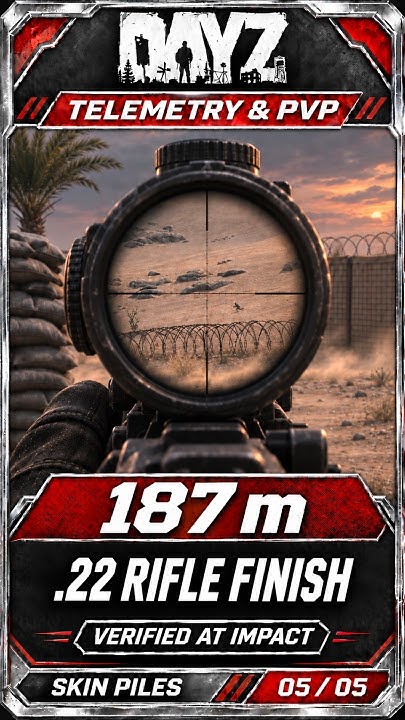
Beyond this grenade experiment, RESQ documents a server-only combat recorder, PVPCombatStats, for movement, hits, damage and round results. Its public dashboard offers filters by session, player and mode, plus comparisons of wins, kills and deaths, shots and recorded hits, headshots and hit zones, shot distances, movement and round duration.
The world maps add layers for player movement, shot origins, damage received and damage dealt. These help answer where a fight happened and how players moved through it. The grenade’s 84-position flight trace is specific to this experiment; it is not a claim that every combat record includes projectile tracking.
The meaning of a number matters. Health remaining differs from damage dealt, player-to-player range differs from projectile travel, and a ratio of recorded hits to shots is not independently verified unique-bullet accuracy. The footage and logs work best together.
RESQ stats, maps and session information ↗